

Thanks to flowers this world is a more beautiful, colourful place. But where do flowers get their colour from? Ever wondered what gives them their bright attractive colour? Or why they are even coloured in the first place? Well, that is what we are going to find out.
 Color Pigments in Flowers
Flowers get their colour from organic pigments produced inside plant cells. Flowers produce different pigments in different strengths to produce a range of colours. These pigments include anthocyanins, carotenoids, and chlorophyll.
Sunlight is made up of all the colours that we can see and more we cant, creating bright white light. The pigments in flowers absorb certain colours of sunlight while reflecting others. The parts of sunlight reflected by the pigments are what give flowers their colour!
Anthocyanins
Pigments of anthocyanins give flowers their deep red, blue and purple colours. They are also responsible for producing the colour pink too.
Carotenoids
Carotenoid pigments are responsible for lighter colours, such as reds, orange, and yellows.
Chlorophyll
Chlorophyll is what gives flowers, plants and leaves their green colour. Chlorophyll handles the creation of food from sunlight in flowers. A process that is known as photosynthesis. It does this by absorbing and converting the high energy light of reds and blues into simple sugars. Yet the colour green is lower in energy compared to reds and blues and gets ignored. As most of the flower is used for food production, eg the leaves, hence why most plants and flowers are green in colour.
Pigments & Genes
Flowers don’t decide on a whim what colours or patterns they should use. Which pigments a flower will produce is stored in their DNA or Genes. Each flower – from the time it was a little seed – is preprogrammed to display certain colours.
Why Are Flowers Brightly Coloured
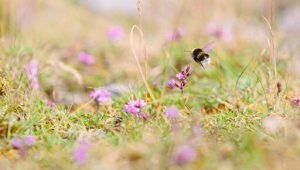 It comes down to the birds and the bees; and insects. You see when it comes to reproduction (or cross-pollination), flowers need help.
There are two methods plants use for reproduction. Either they use the wind to float pollen in the air from flower to flower. Or they rely on insects, birds and the bees to do it for them. Yet birds, bees and insects don’t do this out of kindness, instead, the flowers offer a reward.
Plants that don’t need insects for reproduction don’t advertise for help, staying a dull green colour. They stay green because they still need chlorophyll to convert sunlight into food. But lack beautiful colours because they don’t need to attract the attention of bees and insects.
Those that do need help draw attention to themselves using bright colourful displays. Through evolution the flowers that most successfully attract insects win.
Dull green plants that rely on wind currents generally don’t taste very nice and don’t offer sweet rewards. Bright colourful flowers reward bees and insects that visit them with sweet nectar. When visited, flowers attach pollen to bees and insects which carry it to other flowers.
Rewards also extend to seeds or the fruit that plants create once fertilised. Those that rely on the wind don’t produce any tasty fruit. Plants that rely on insects and birds or even animals produce tasty fruit with seeds inside. When animals eat the fruit and move on they drop the undigested seeds in their droppings. Helping the flowers and seeds spread and reproduce over a larger area.
Why Do Flowers Have Different Colours
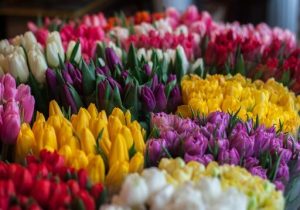 The more successful a plant or flower is at attracting insects the more successful it will be. Over time competition between flowers creates an array of beautiful colours and patterns. Flowers may also end up attracting certain types of insects that are more active than others. Through evolution, bright colourful flowers survive while the more boring ones die off.
Insects learn which flowers have the tastiest rewards, remembering that flower’s specific display. Those with the tastiest rewards get visited more often and are more successful.
It is a win-win relationship between flowers and insects. The sweetest colourful flowers and most active insects help each other to survive!
So there you have it, evolution in action. Those flowers with the most attractive colours and nectar survived. While the weaker competition did not. Leaving our world with a lovely bouquet of colourful flowers and scents too. More for us to enjoy, making the world a brighter place in the process.